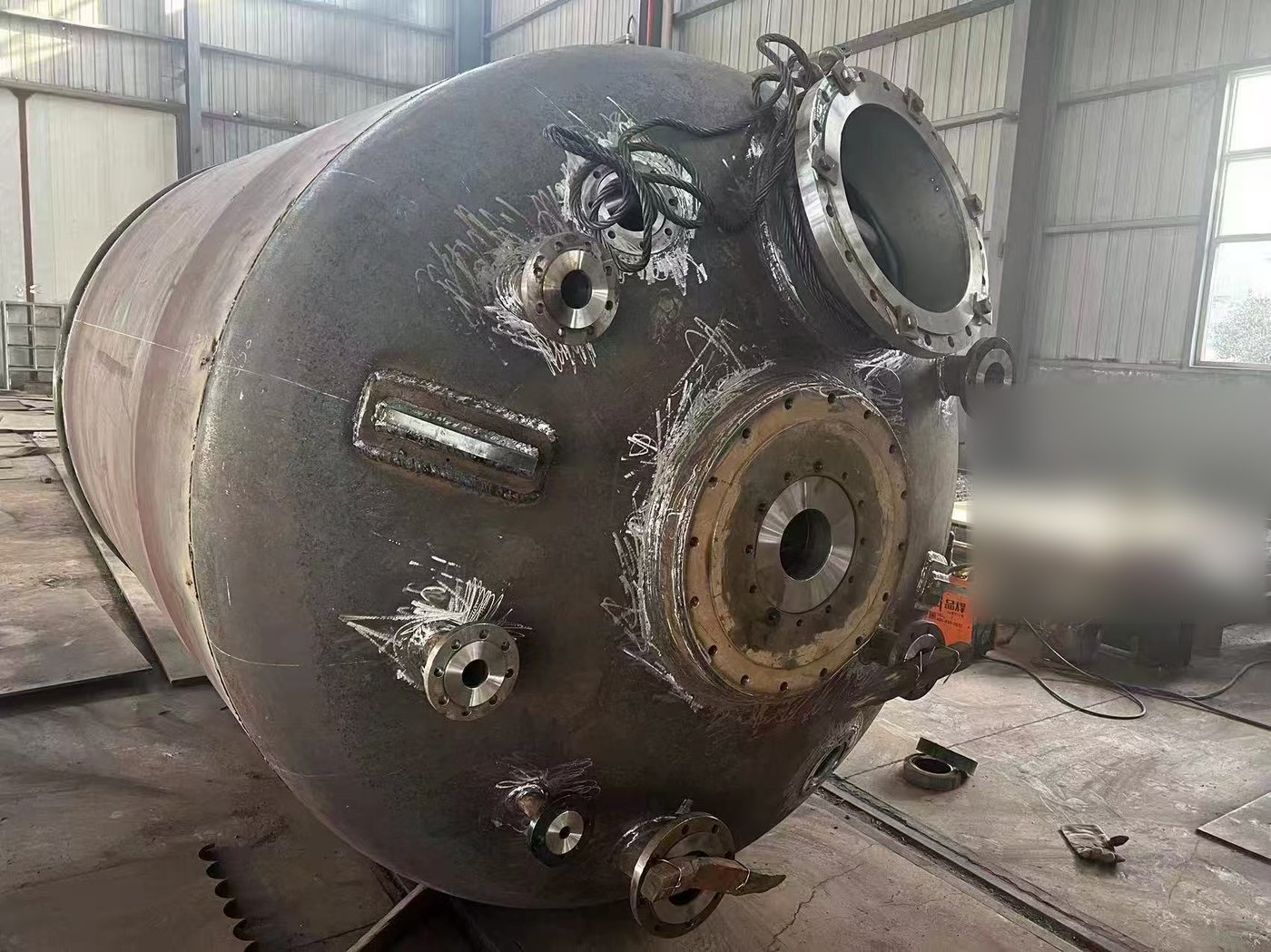
A reactor spare parts order with the vessel should include the mechanical seal and its stationary seat, a full set of manway and nozzle gaskets, and the cover fasteners. On a 3,000 L glass-lined reactor with a jacket and mechanical seal, that package is a small fraction of the USD 8,000–14,000 ex-works vessel price; the omission is what turns a minor seal failure into weeks of downtime.
1. The seal is a matched assembly, not a catalogue part
A mechanical seal on a glass-lined reactor is selected against shaft diameter, agitator speed, design pressure in MPa and the media in the vessel. Order the complete seal assembly, the stationary seat, the secondary O-rings and the spring set as one line. If the vessel has a packed seal instead, order the braided packing rings, the lantern ring and the gland follower.
Ask for the seal drawing and the wetted material certificate with the vessel documents. A seal drawing that arrives after the vessel is on site is a drawing that arrives after the first leak. The seal is the part most likely to stop the plant, and it is the part most often left off the vessel purchase order.
2. Gaskets: order a full spare set, in the right material
Every manway, cover, nozzle, jacket connection and instrument port has a gasket. For a PTFE-lined vessel, the specification names PTFE and rubber-encapsulated PTFE gaskets. For a glass-lined vessel, the gasket still has to suit the media, the operating temperature and the cover load.
Order at least one full spare set, and a second set for the manway if the vessel is opened often. Store them flat, out of sunlight, and label them by port size and service. A gasket that has sat on a shelf for two years without a label is not a spare part; it is a guess.
Do not let a local supplier substitute nitrile or EPDM because it is in stock. The glass lining itself is not suitable for hydrofluoric acid, fluoride-bearing media, phosphoric acid at 30 % or above and over 180 °C, or strong alkali above pH 12 at 100 °C. If your duty sits near those limits, the gasket is the least of the problems and the vessel specification needs review before the order is placed.
3. Fasteners and clamps
Cover bolts, swing clamps, nuts and washers are cheap and specific. The stainless steel build options list galvanised, stainless or fluoropolymer-lined bolts; the choice is made for corrosion, not for appearance. Order one complete spare set in the same material and coating as the original.
Uneven torque on a glass-lined cover is a common cause of gasket leaks. Keep the spare set with a torque wrench and the torque value in the operating manual. If the manual does not give a value, ask for it before shipment, not after the first drip appears on the floor.
4. Agitator and drive: the honest trade-off
The agitator is built for the duty — paddle, anchor, disc turbine, hydrofoil, impeller or dispersion disc — and a spare is not a shelf item. For a single-train plant with no bypass, a spare agitator or at least a spare shaft assembly can be justified. For a plant with parallel capacity, it usually is not.
The motor and gearbox are more standard, but check the frame size and ratio. A local motor may fit the mounting; it may not match the shaft height or the coupling. Put the motor frame, power in kW, gearbox ratio and coupling drawing on the spare parts list, even if you do not buy the spare at the same time.
This is the part of the list where money is real. Do not gold-plate it. Do not leave it blank either.
5. Nozzle hardware and blind covers
The nozzle schedule lists every port by size and service. Every unused nozzle needs a blind cover and a gasket in the material specified for the wetted parts. The spare parts list should mirror the nozzle schedule line for line, so nothing is ordered twice and nothing is missed.
Dip tubes, spargers and thermometer pockets are made to the drawing and often lined or glassed. If the duty is corrosive and the plant cannot run without that nozzle, order a spare with the vessel. If it is a standard port with a local equivalent, do not.
6. Documentation counts as a spare part
Ask for the as-built drawing, the seal drawing, the spare parts list with part numbers, the lining thickness in mm, the high-voltage test record in kV and the material certificates. These are not paperwork; they are what a local machine shop needs to quote a replacement in a hurry.
We issue the vessel and the spares on one numbered specification confirmation sheet. You approve the seal type, gasket material, fastener coating and nozzle list before fabrication starts. That single sheet is the difference between a spare parts order and a box of parts that almost fits.
7. What not to order
Do not order a complete spare glass-lined vessel 'just in case'. The vessel is the expensive item, and a spare vessel is a capital project, not a spare part. Do not order a full spare agitator if the plant has a second train and the duty is not critical. The cheaper option is sometimes the right one: buy the seal, the gaskets and the fasteners, and leave the agitator to the drawing.
Do not accept a generic gasket set. A gasket that is not rated for the media is not a spare; it is a planned leak.
8. The line items to send with the enquiry
- Seal: complete mechanical seal assembly, stationary seat, secondary seals and spring set, or packing rings and lantern ring for a packed seal.
- Gaskets: one full set for manway, cover and every nozzle, named by size and material.
- Fasteners: one complete cover set in the specified material and coating.
- Nozzle hardware: blind covers and gaskets for unused ports.
- Agitator: only if the duty is critical; otherwise the drawing and spare shaft details.
- Documents: as-built drawing, seal drawing, high-voltage test record, material certificates and spare parts list with part numbers.
Send that list with the vessel enquiry, not after the vessel arrives. For a reactor bound for India, Southeast Asia, the Gulf, Russia/CIS or Latin America, the freight and the customs entry already take time; the spare parts should not add another wait.
9. Takeaway
Put the seal, gaskets, fasteners and nozzle hardware on the same purchase order as the vessel, and ask for the documents in the same package. Check the seal drawing against the agitator shaft, check the gasket material against the media, and check the fastener coating against the wash-down regime. If you do only one thing, make the spare parts list a numbered line on the specification confirmation sheet you approve before fabrication. We quote the vessel, jacket, agitator, seal, lining and spare parts as separate lines, so the spare parts package has a price you can compare rather than a lump sum.