Reaction vessels, chosen properly
Three material families, 50 to 30,000 litres, all available as custom builds. Below is what each one is for, and where it fails.
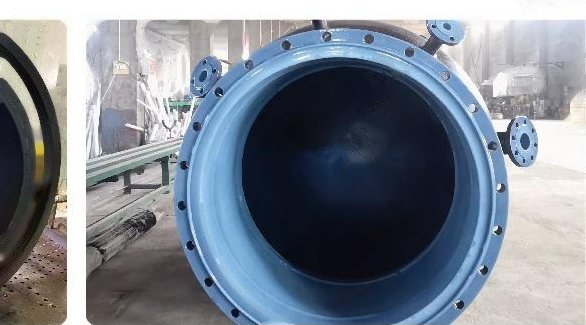
Glass-Lined Reactors
A vitreous glass lining 0.8–2.0 mm thick is fired onto the steel wall at 850–950 °C. The result is a vessel with the corrosion resistance and non-stick surface of glass and the mechanical strength of steel — which is why roughly 70 % of the reactors sold into pharma and fine chemicals are this type.
- Operating temperature −19 °C to 180 °C (200 °C short term)
- Resists most inorganic and organic acids; not hydrofluoric acid or strong alkali
- 20 kV spark test on every unit — lining guaranteed free of pinholes
- Type K for small and medium volumes needing frequent opening; Type F for larger, higher-pressure and better-sealed duty
Glass-lined reactor — main technical parameters
| Parameter | Inner vessel · packed seal | Inner vessel · mechanical seal | Jacket |
|---|---|---|---|
| Design pressure (MPa) | < 0.1 | 0.4 | 0.6 |
| Design temperature (°C) | 200 | ||
| Operating temperature (°C) | −19 – 180 | ||
| High-voltage test (kV) | 20 | ||
| Glass lining thickness (mm) | 0.8 – 2.0 | ||
| Thermal shock resistance | Cold shock ≤ 110 °C · Heat shock ≤ 120 °C | ||
| Application media | Inorganic and organic acids, organic solvents and weak bases at various concentrations. Not suitable for hydrofluoric acid, fluoride-bearing media, phosphoric acid ≥ 30 % above 180 °C, or strong alkali above pH 12 / 100 °C. | ||
Reference: Standard configuration reference values. Actual volume, heat-transfer area and weight vary with design pressure, jacket type, sealing arrangement and non-standard requirements — confirmed against the final technical drawing.
Type K (open) — full specification
| Model | Nominal volume (L) | Actual volume (L) | Heat area (m²) | Motor (kW) | Speed (r/min) | Weight (kg) |
|---|---|---|---|---|---|---|
| K50 | 50 | 70 | 0.34 | 0.75 | 63 / 85 | 445 |
| K100 | 100 | 127 | 0.84 | 0.75 | 63 / 85 | 548 |
| K200 | 200 | 247 | 1.44 | 1.1 | 63 / 85 | 649 |
| K300 | 300 | 369 | 1.75 | 3.0 | 63 / 85 | 968 |
| K500 | 500 | 588 | 2.64 | 3.0 | 63 / 85 | 1,175 |
| K1000 | 1,000 | 1,245 | 4.5 | 4.0 | 63 / 85 | 1,803 |
| K1500 | 1,500 | 1,714 | 5.2 | 4.0 | 63 / 85 | 2,190 |
| K2000 | 2,000 | 2,160 | 7.02 | 4.0 | 63 / 85 | 2,450 |
| K3000 | 3,000 | 3,237 | 8.61 | 5.5 | 63 / 85 | 3,470 |
| K4000 | 4,000 | 4,255 | 11.7 | 5.5 | 63 / 85 | 4,018 |
| K5000 | 5,000 | 5,380 | 13.69 | 5.5 | 63 / 85 | 4,568 |
| K6300 | 6,300 | 6,493 | 15.8 | 7.5 | 63 / 85 | 5,690 |
| K8000 | 8,000 | 8,450 | 18.3 | 11 | 63 / 85 | 7,576 |
| K10000 | 10,000 | 10,520 | 21.15 | 11 | 63 / 85 | 9,013 |
| K12500 | 12,500 | 13,040 | 25.79 | 15 | 63 / 85 | 10,920 |
Type F (closed) — full specification
| Model | Nominal volume (L) | Actual volume (L) | Heat area (m²) | Motor (kW) | Weight (kg) |
|---|---|---|---|---|---|
| F1000 | 1,000 | 1,520 | 4.93 | 3 | 1,837 |
| F1500 | 1,500 | 1,961 | 5.35 | 4 | 2,090 |
| F2000 | 2,000 | 2,180 | 7.16 | 4 | 2,603 |
| F2500 | 2,500 | 3,385 | 8.68 | 4 | 3,100 |
| F3000 | 3,000 | 3,911 | 8.61 | 5.5 | 3,554 |
| F5000 | 5,000 | 5,905 | 13.6 | 5.5 | 5,160 |
| F6300 | 6,300 | 6,866 | 16 | 7.5 | 5,252 |
| F8000 | 8,000 | 9,080 | 19.8 | 7.5 | 6,430 |
| F10000 | 10,000 | 11,674 | 21.35 | 11 | 8,250 |
| F12500 | 12,500 | 13,651 | 24.89 | 15 | 9,780 |
| F16000 | 16,000 | 17,463 | 29.48 | 18.5 | 11,440 |
| F20000 | 20,000 | 21,790 | 34.03 | 18.5 | 13,220 |
| F30000 | 30,000 | 32,520 | 43.85 | 22 | 20,500 |
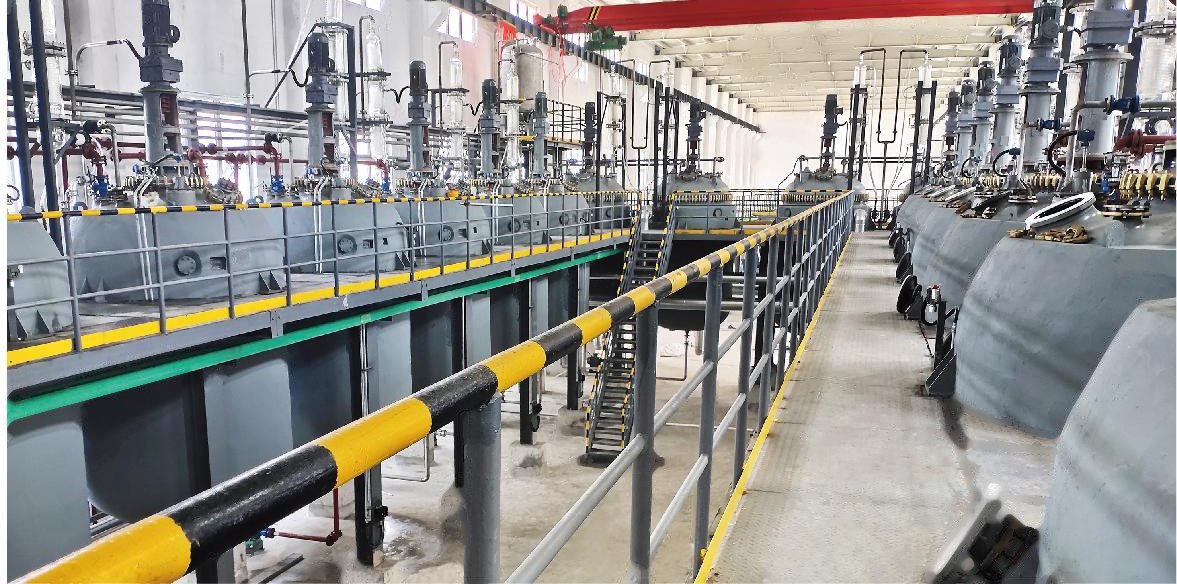
Stainless Steel Reactors
Where glass lining is wrong — strong alkali, fluoride-bearing media, high pressure, or where nothing but a polished hygienic surface will do — stainless steel takes over. Internal surfaces are mirror-polished to GMP standard with no dead corners, and the shell material is selected against your medium rather than against price.
- Open or closed construction; jacket, inner coil, immersion tube or half-pipe heating
- Six agitator types: paddle, anchor, disc turbine, hydrofoil, impeller, dispersion disc
- Sterile-grade mechanical seals available for pharmaceutical duty
- Supplied with storage tanks, shell-and-tube exchangers, columns and automation packages
Stainless steel build options
| Vessel type | Open (removable cover) or closed (integral head) |
| Heat transfer | Jacket · inner coil · immersion tube · half-pipe coil |
| Shell material | Carbon steel, 304 / 316L, titanium, duplex stainless, Hastelloy, clad plate |
| Internal finish | GMP mirror polish, hygienic no-dead-corner; sterile-grade mechanical seal available |
| Agitator options | Paddle · anchor/frame · disc turbine · hydrofoil · impeller · dispersion disc |
| Associated equipment | Storage tanks, shell-and-tube exchangers, columns, condensers, automation packages |
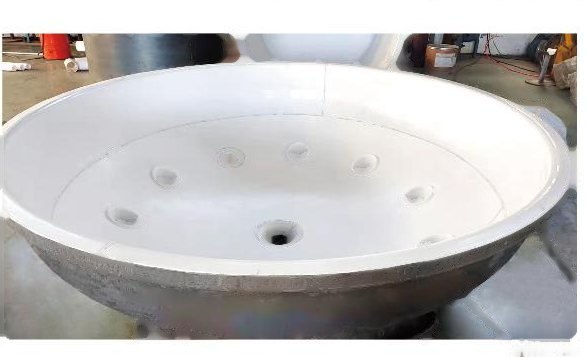
PTFE-Lined Reactors
A steel shell carries the pressure; a fluoropolymer lining carries the chemistry. Applied by rotational or spray coating, the lining handles what neither glass nor stainless will: fluoride acids, strong oxidisers and ultra-high-purity work. It does not scale, does not foul and does not shed ions into your product.
- Widest corrosion coverage of the three families — including fluoride-bearing media
- Non-scaling and non-fouling; preserves product purity
- Lining grade selected by our process engineers against composition, concentration, temperature and pressure
- Lined storage tanks available in the same construction
PTFE lining options
| Vessel type | Open or closed |
| Heat transfer | Jacket · inner coil · immersion tube · half-pipe coil |
| Shell material | Carbon steel, stainless steel, titanium, duplex stainless |
| Lining material | PFA · PTFE · ETFE (F40) · ECTFE (F30) · FEP (F46) — spray or rotational coating |
| Seals & fasteners | PTFE and rubber-encapsulated PTFE gaskets; galvanised, stainless or fluoropolymer-lined bolts |
| Associated equipment | PTFE-lined vertical and horizontal storage tanks, in black or white lining |
Same vessel, three prices. Here is the range.
Cost first, because pretending otherwise wastes your time. A 3,000 L glass-lined reactor with a jacket and a mechanical seal is a normal purchase, and it lands somewhere between $8,000 and $14,000 depending on how it is built.
- Jacket type — a plain jacket, a half-pipe coil and a dimple jacket are three different fabrications with three different prices.
- Sealing — packed gland, single mechanical seal or double-faced seal under vacuum duty.
- Lining — the specified enamel thickness, and how evenly it was fired. This is where quotations quietly diverge.
- Evidence — material certificates, 20 kV spark test records, third-party inspection. Some quotes include them; some hope you will not ask.
- Fittings and brand — gearbox, seal faces, valves and instruments are often where a cheap quote was written.
- Lead time — a realistic schedule, or an optimistic one you will pay for later.
We quote these six items line by line so you can put our number next to anyone else's. If a competing quotation does not break them out, that is the answer to why it looks cheaper.
The parts that decide whether the vessel works.
A reactor is only as good as its agitator, its seal and its drive. We specify these as a system, not as a price list.
Six agitator types
Paddle, anchor/frame, disc turbine, hydrofoil, impeller and dispersion disc — chosen by viscosity and by whether you need blending, dispersion, suspension or heat transfer.
Four mechanical seal designs
Single-face, axial double-face cartridge, radial double-face stationary and dry-running. Rated from −0.1 to 1.6 MPa and up to 500 rpm.
Seal circulation systems
Nitrogen-pressurised isolation fluid with cooling and lubrication, plus forced circulation for high temperature or high speed.
Four gear drive families
Cycloidal (BLD), helical (RF), spiral bevel (KF) and heavy spiral bevel (ZL) — matched to torque, shaft speed and mounting height.
Baffles & thermowells
Flattened-tube baffles that double as temperature wells, fitted to international nozzle standards.
Spares & consumables
Agitators, seals, clamps, gaskets, sight glasses, discharge valves, manhole covers and pressure gauges — supplied for the life of the vessel.
Send us your duty. We'll send you a specification.
No obligation and no sales sequence. Tell us what you are trying to make, and we will tell you what it takes — vessel, material, limits and price.