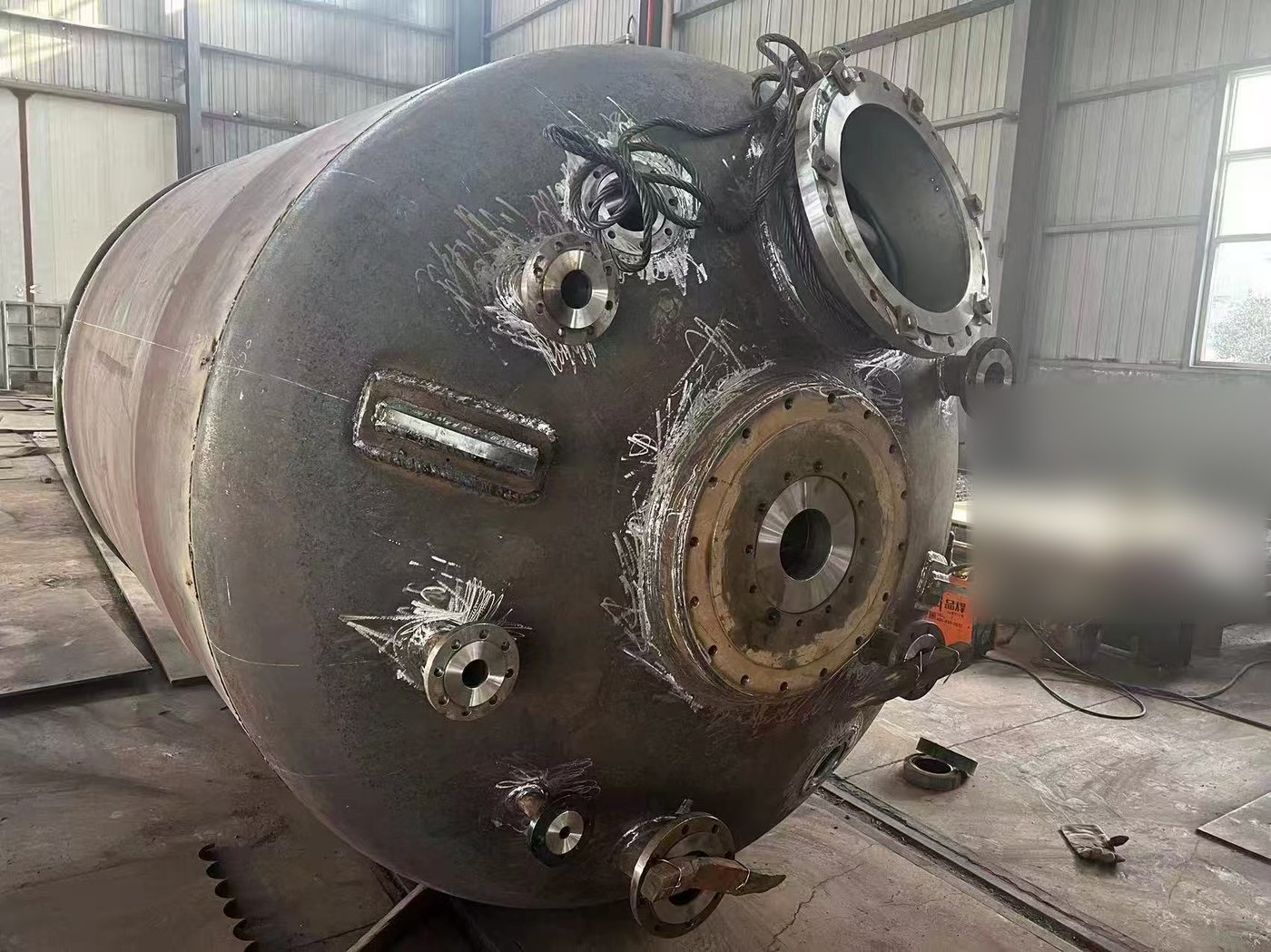
A jacketed glass-lined reactor from China is normally declared under HS 8419.89 — machinery for the treatment of materials by a process involving a change of temperature — and not under 7309.00, the heading for steel tanks above 300 L that carry no mechanical or thermal equipment. The six-digit code decides the duty line, the import licence and the conformity certificate that apply, so it must be agreed before the proforma invoice is signed, not when the container is already on the quay.
1. The four headings you will actually see on a reactor shipment
Most classification arguments are settled by three questions: does the vessel transfer heat, does it agitate, and is it over 300 L. The answers put you in one of these headings.
- 8419.89 — jacketed reactors, vessels with an inner coil, half-pipe coil or immersion tube. A jacket is thermal equipment, and thermal equipment is what this heading covers.
- 8479.82 — mixing, kneading, stirring machines. An agitated vessel with no jacket and no coil lands here.
- 7309.00 — reservoirs, tanks and vats of iron or steel over 300 L, lined or heat-insulated, but not fitted with mechanical or thermal equipment. A bare storage tank, nothing more.
- 8419.50 — heat exchange units. A separate shell-and-tube condenser or cooler on the same order is not a 8419.89 item.
Parts follow the parent: 8419.90 for a seal cartridge or a jacket nozzle assembly supplied against a reactor, 8479.90 for agitator shafts on a mixer. Do not let a spare-part line drift onto the vessel's code without a written reason.
2. The jacket is the deciding feature, and the lining is not
A 500 L unjacketed PTFE-lined storage tank and a 500 L jacketed glass-lined reactor are both lined steel shells. Customs treats them as different machines, because one has thermal equipment and one does not. Get that single fact wrong and the whole entry is wrong.
The lining material does not move the code. Glass-lined, PFA-lined, ETFE-lined, bare 316L — same six digits when the function is the same. The lining shows up in the declared value per litre, which is where a valuation officer looks first. A 3,000 L glass-lined vessel and a 3,000 L PTFE-lined vessel of similar build sit in the same price band; a 3,000 L reactor declared at a storage-tank value does not.
The test we apply before quoting: can the classification be justified from the general arrangement drawing alone, without reference to the invoice? If it needs the invoice, it is the wrong classification.
3. What has to match, character for character
Classification is half the job. The other half is that five documents carry the same story: the commercial invoice, the packing list, the bill of lading, the certificate of origin and the Chinese export declaration. Model designation, capacity in litres, design pressure in MPa, number of packages, gross weight in kg.
The common mismatch runs between the two ends. A supplier books the vessel under 7309.00 on the Chinese export side because it suits their paperwork, and the importer files 8419.89 at destination because the drawing shows a jacket. That discrepancy is visible to both administrations, and it is the importer who answers for it.
Agree in writing before shipment: the six-digit code, the justification in one sentence, and the drawing number that supports it. That note is what your broker attaches to the entry and what you produce if the entry is queried six months later.
4. Market notes that change the paperwork, not the physics
India. Chapter 98, heading 9801 covers machinery required for the initial setting up of a unit, and project import treatment is worth checking before you accept the standard chapter 84 rate. It requires the project to be registered and the goods to appear on the approved list. Separately, confirm whether the SMPV (Unfired) Rules apply to your design pressure and volume — that is a safety approval, not a customs one, and it runs on its own clock.
ASEAN. The ACFTA Form E is what turns the duty line into a preference. Apply for it before the vessel sails. A certificate issued after departure is not fatal, but it invites questions at destination that cost more in demurrage than the preference is worth.
GCC. Saudi Arabia requires a SABER product certificate of conformity; the UAE runs its own scheme. Both are consignee-side obligations, and the container is not released without them however correct the HS code is.
Russia and the EAEU. The declaration needs the ten-digit TN VED code, and pressure equipment needs EAC conformity under TR CU 032/2013 before it can be placed on the market. Vessels with wetted parts in titanium, duplex or Hastelloy can also raise a dual-use classification question, so put the material spec in front of your broker early.
Latin America. Mercosur applies a common external tariff, and Brazil's ex-tarifário regime can reduce duty on capital goods with no domestic equivalent — but the application is made before shipment, not at the port.
5. Five traps we see repeatedly
- Declaring a jacketed reactor as a storage tank. The jacket is drawn on the general arrangement. The declaration contradicts a document customs already holds.
- Splitting the invoice into vessel plus "engineering fee". The fee is part of the price paid for the goods. Undervaluation findings start exactly here.
- Certificate of origin that does not match the invoice party. Third-party invoicing is permitted under most schemes, but only if the box is ticked and the names match to the letter.
- Accessories in a second container. The agitator and mechanical seal arrive on a later bill of lading under a different code, and the parent machine waits in bond for its own parts.
- Conformity certificate started after the vessel sails. EAC and SABER both take weeks. Duty is settled in a day; certification is not.
6. What we hand over with the shipping documents
For every vessel we ship we issue a one-page classification note: model designation, the six-digit code we propose, the sentence that justifies it, capacity in litres, design pressure of inner vessel and jacket in MPa, and the drawing revision it refers to. It goes to your broker, not to us. Your broker files the entry.
We do not give legal classification advice and we do not quote duty rates. Tariff lines change with the date of the declaration, and the binding answer comes from your own authority — in India an advance ruling under section 28H of the Customs Act, in the EAEU a preliminary classification decision under Article 21. What we can do is make sure the factory's export declaration and your import declaration carry the same digits, because that is the failure we can actually prevent.
Takeaway
Before you sign the proforma, get three things in writing from the supplier: the HS code they will declare on export, the sentence explaining it, and the drawing number that shows a jacket. Confirm the code is 8419.89 where the vessel has thermal equipment, 8479.82 where it agitates without heat transfer, and 7309.00 only where it does neither and holds more than 300 L. Hand that note to your customs broker before the vessel sails, and open the EAC or SABER file in the same week.